Equipment That Runs Reliably Year-Round
Pool Equipment Maintenance & Repair in San Antonio for systems requiring proactive component care and emergency diagnostics
Pool equipment failure rarely announces itself with warning—pumps seize, heaters stop igniting, and filters develop internal bypass channels that compromise circulation. Northside Pool Management integrates equipment maintenance into weekly service visits across San Antonio's north side, catching component degradation before it creates circulation loss or water quality problems. Equipment reliability matters in a climate where pools operate year-round and a three-day repair delay results in algae growth that requires chemical intervention and manual brushing to reverse.
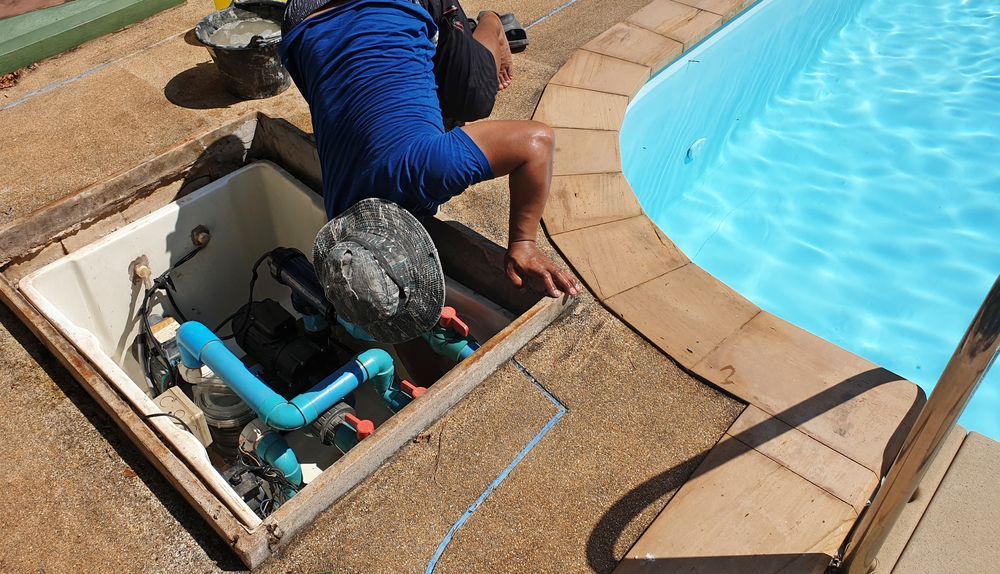
Preventive maintenance includes regular equipment inspections during service visits, component diagnostics, repair coordination, and replacement recommendations based on equipment-specific protocols. Pumps are monitored for motor noise and bearing wear, filters are evaluated for pressure differential and flow rate, and heaters are tested for ignition sequence and combustion efficiency.
Arrange an on-site consultation to review your current equipment condition and develop a maintenance schedule that prevents unexpected failures.
Why Equipment Sizing Affects Repair Frequency
Equipment diagnostics focus on identifying component wear patterns before they result in complete failure. Pump motor amperage is measured to detect winding degradation, filter internals are inspected for media channeling or cartridge collapse, and heater heat exchangers are checked for scale buildup that reduces efficiency. Each component is evaluated against its expected lifespan based on local water chemistry and operating hours.
After repairs or component replacements, you notice immediate changes in circulation clarity, pressure gauge readings that stabilize within normal ranges, and heating cycles that reach target temperature without repeated ignition attempts. Equipment sized correctly for your pool volume operates quieter, maintains consistent flow rates, and requires fewer interventions over its service life.
Maintenance protocols vary by equipment type—variable-speed pumps require different bearing care than single-speed models, cartridge filters need replacement intervals that differ from sand or DE systems, and gas heaters demand combustion chamber cleaning that electric heat pumps do not. Understanding these distinctions prevents generic repair approaches that overlook equipment-specific requirements.
Questions About Equipment Service and Repair
Property owners across San Antonio's north side ask about equipment maintenance intervals and what proactive care prevents in a year-round service climate.
What causes pool equipment to fail prematurely?
Improper chemical balance accelerates corrosion on pump seals and heater heat exchangers, while undersized equipment runs longer hours than designed, shortening motor and bearing lifespan. Lack of routine inspections allows small issues like seal weeps or pressure imbalances to escalate into complete component failure.
How often should pool equipment be inspected?
Equipment receives diagnostic evaluation during weekly service visits, with detailed component inspections scheduled quarterly or when performance indicators such as pressure readings or flow rates deviate from baseline. San Antonio's year-round operation increases wear compared to seasonal climates, making consistent monitoring critical.
What does equipment maintenance include beyond chemical service?
Maintenance includes pump motor amperage testing, filter pressure monitoring, heater ignition sequence verification, plumbing leak checks, and automation system diagnostics. Components are evaluated for wear patterns that indicate impending failure, allowing scheduled replacement instead of emergency repair.
Why does equipment sizing matter for long-term costs?
Oversized pumps waste energy and create excessive flow rates that stress plumbing joints and filter internals, while undersized systems run continuously trying to maintain circulation, accelerating motor wear. Properly matched equipment operates within design parameters and achieves expected service life without premature replacement.
When should I replace equipment instead of repairing it?
Replacement makes sense when repair costs exceed fifty percent of replacement value, when parts are no longer available for discontinued models, or when energy-efficient upgrades offer payback through reduced operating costs. Variable-speed pumps, for example, reduce energy consumption enough to justify replacement even when older single-speed models still function.
Northside Pool Management integrates equipment diagnostics into weekly service protocols, preventing emergency failures through proactive component monitoring. Contact our team directly to establish a maintenance program tailored to your equipment configuration and operating conditions.